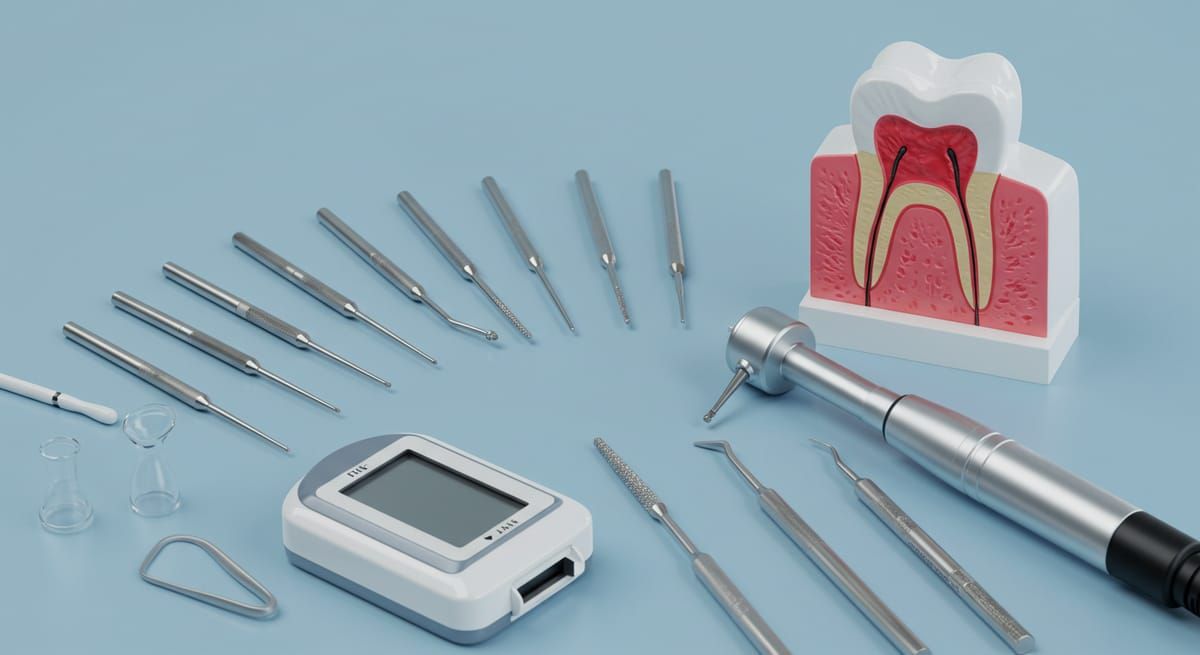
An apicoectomy is a minor surgical procedure that saves a root canal treated tooth when infection persists or returns at the root tip. Working through the gum under local anesthesia, the endodontist removes the last few millimeters of the root along with the infected tissue and seals the canal from the bottom with a small filling. The procedure takes 30 to 90 minutes, costs $900 to $2,000 in the US, and succeeds in roughly 85 to 95 percent of cases when performed with modern microsurgical techniques. It exists for one scenario: the tooth is worth keeping, a conventional retreatment through the crown is impossible or has already failed, and the alternative is extraction.
When an Apicoectomy Is the Right Tool
A root canal succeeds around 90 to 95 percent of the time. In the failures, infection persists at the root tip, showing up as returning tenderness, a gum pimple, or a dark spot on the X-ray months to years later (the symptom picture is described in pain after a root canal). At that point there are three paths: redo the root canal from the top (retreatment), operate at the bottom (apicoectomy), or remove the tooth.
The apicoectomy wins when:
- Retreatment is blocked. The tooth carries a good crown and post whose removal would risk destroying it, or the canal is blocked by calcification, a separated instrument fragment, or extremely curved anatomy.
- Retreatment already failed. The infection survived a competent second cleaning, pointing to something at the root tip itself: branching accessory canals, a cyst, or infection outside the root end that no work through the canal can reach.
- The problem is visible at the apex. A persistent lesion, an overfilled or underfilled root end, or a suspected micro-crack at the tip that needs direct inspection under the microscope.
It is not the tool for a tooth with a vertical root fracture (usually extraction; see cracked tooth), severe gum disease undermining the whole root, or a tooth not worth the investment, cases where root canal vs extraction logic applies.
The Procedure, Step by Step
Modern apicoectomy is a microsurgical procedure: operating microscope, micro-instruments, ultrasonic tips. Under the microscope, the success rates climbed from the mediocre figures of decades past to today's 85 to 95 percent, which is why choosing an endodontist equipped for microsurgery matters more here than anywhere else in this field.
- Anesthesia and access (10 to 15 minutes). Local anesthetic, then a small flap of gum near the root tip is gently lifted.
- Reaching the apex. A few millimeters of bone over the root tip are opened to expose the root end and the infected tissue around it.
- Cleaning and resection. The inflamed or infected tissue is removed, and the last 3 millimeters or so of the root tip are trimmed, taking with them the maze of accessory canals where bacteria hide from conventional treatment.
- The retrograde filling. The canal is inspected under magnification, cleaned from the bottom with ultrasonic tips, and sealed at the root end with a small plug of biocompatible cement. This bottom-up seal is the heart of the procedure.
- Closure (10 minutes). The gum flap is repositioned and closed with fine sutures, removed or dissolving within about a week.
Total chair time: 30 to 90 minutes depending on the tooth; front teeth are quicker, back molars longer. You are awake, numb, and able to drive home afterward.
Apicoectomy Cost
| Item | Typical US cost |
|---|---|
| Apicoectomy, front tooth | $900 to $1,300 |
| Apicoectomy, premolar or molar | $1,200 to $2,000 |
| 3D imaging (CBCT) when needed | $150 to $600 |
Dental insurance generally treats apicoectomy as a covered endodontic procedure at 50 to 80 percent, subject to the annual maximum, on the same logic as the coverage rules in our root canal cost guide. The comparison that matters: an apicoectomy at $900 to $2,000 versus extraction plus an implant at $3,700 to $6,700. When the tooth is savable, the surgery is the economical option, not the extravagant one.
Recovery: Easier Than It Sounds
Recovery from an apicoectomy is closer to a tooth extraction's first days than to anything dramatic:
- Days 1 to 2: swelling and bruising near the site peak (a cold compress in 15-minute intervals the first day helps substantially), with soreness managed by the over-the-counter or prescribed regimen your surgeon recommends. Soft food, no chewing on that side, no strenuous exercise.
- Days 3 to 7: swelling recedes, sutures come out or dissolve, normal eating largely returns. Most people work the next day or the day after; plan around any swelling-visible-in-meetings concerns rather than pain.
- Weeks 2 to 4: the gum looks healed. Underneath, bone begins refilling the surgical site.
- Months 3 to 12: bone regeneration completes, monitored on follow-up X-rays. The definitive "healed" verdict comes from those images, not from how the tooth feels.
Success Rates and the Long Game
Contemporary microsurgical apicoectomy reports success in the range of 85 to 95 percent at follow-up, meaning the infection resolves, the bone heals, and the tooth stays. Failures cluster around undetected root cracks, teeth with compromised gum support, and cases done without magnification. When an apicoectomy does fail, the honest conversation about extraction and replacement follows. When it succeeds, which is most of the time, the tooth simply returns to duty, crown and all, often for the rest of its owner's life: a few millimeters of root traded for the whole tooth.
FAQ
What is an apicoectomy?
A minor microsurgery that saves a failed root canal tooth by removing the root tip and infected tissue through the gum and sealing the canal from the bottom with a small filling.
How much does an apicoectomy cost?
$900 to $2,000 in the US depending on the tooth, typically covered by dental insurance at the same level as other endodontic procedures. It is far cheaper than extraction plus an implant.
Is an apicoectomy painful?
The procedure is done under local anesthesia and is not painful. Recovery involves a few days of swelling and manageable soreness, comparable to a routine extraction.
How long does apicoectomy recovery take?
Back to work in 1 to 2 days, sutures out within a week, gum healed in 2 to 4 weeks, and full bone healing confirmed on X-rays over 3 to 12 months.
What is the success rate of an apicoectomy?
Around 85 to 95 percent with modern microsurgical technique, which is why an endodontist with an operating microscope is the right provider for this procedure.