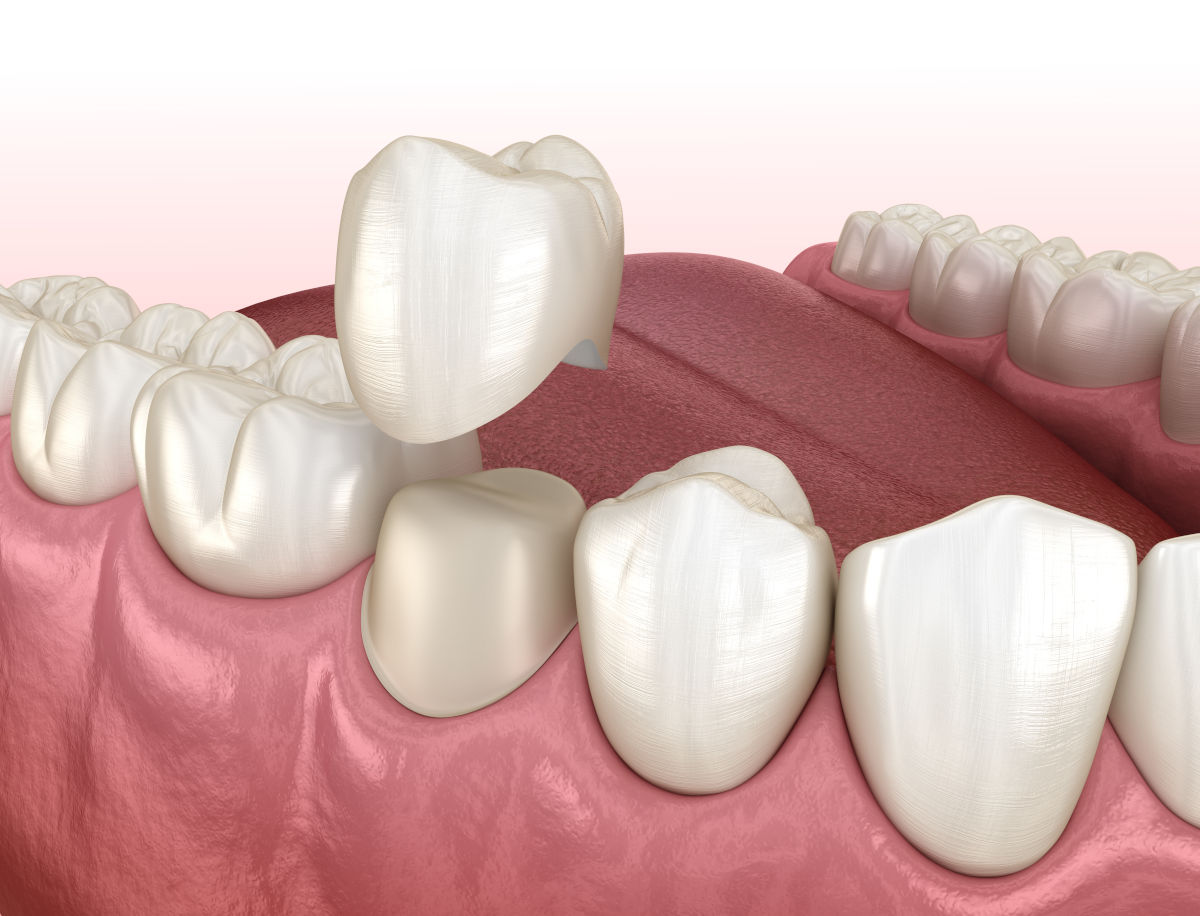
A root canal costs $700 to $1,800 in the United States depending on the tooth: $700 to $1,100 for a front tooth, $800 to $1,400 for a premolar, and $1,000 to $1,800 for a molar. The crown that most treated back teeth need adds $800 to $2,500, bringing the realistic total for a molar to $1,800 to $4,300 before insurance. Dental insurance typically covers 50 to 80 percent of the root canal itself as a major or basic procedure, subject to your annual maximum. Despite the sticker shock, a root canal plus crown is almost always cheaper than the alternative: extraction followed by an implant runs $3,500 to $6,000 or more.
Root Canal Cost by Tooth Type
| Tooth | Typical cost (general dentist) | Typical cost (endodontist) |
|---|---|---|
| Front tooth (incisor, canine) | $700 to $1,100 | $900 to $1,300 |
| Premolar | $800 to $1,400 | $1,000 to $1,500 |
| Molar | $1,000 to $1,800 | $1,300 to $2,000 |
Molars cost more for the same reason they take longer: three or four canals instead of one (the anatomy is covered in our guide to how long a root canal takes). Endodontists, the root canal specialists, charge a premium of roughly 15 to 25 percent over general dentists. That premium buys microscopes, 3D imaging, and daily case volume, and for complex molars, curved canals, and retreatments it is usually money well spent: a root canal that fails and needs redoing costs far more than the specialist difference.
Geography moves these numbers substantially: large coastal metros price 20 to 40 percent above the national ranges, rural areas below them.
The Real Total: Root Canal Plus Crown
The root canal fee is not the whole bill. A realistic all-in budget:
| Item | Typical cost |
|---|---|
| Exam and X-rays / 3D imaging | $50 to $350 |
| Root canal treatment | $700 to $1,800 |
| Post and core buildup (often needed) | $200 to $500 |
| Crown | $800 to $2,500 |
| Realistic molar total | $1,800 to $4,300 |
Front teeth often escape the crown requirement and can sometimes be finished with a filling, which is why a front tooth root canal can genuinely stop near $1,000 all-in while a molar cannot. When comparing quotes, always ask whether the figure includes the buildup and crown; a low root canal quote that excludes them is not a low quote.
Root Canal Cost With Insurance
Most dental plans classify root canals as a basic or major procedure covered at 50 to 80 percent after your deductible. The practical math is dominated by two constraints:
The annual maximum. Most plans cap total yearly benefits at $1,000 to $2,000. A molar root canal plus crown consumes an entire annual maximum and then some, so your true out-of-pocket often lands at $1,000 to $2,500 even with decent coverage.
Timing strategy. If treatment can safely span two plan years (root canal in December, crown in January), two annual maximums apply instead of one. Ask your dentist whether your case can wait those weeks; an actively infected tooth usually cannot, a stable one sometimes can.
Also worth checking: waiting periods on newly purchased individual plans (often 6 to 12 months for major procedures) and whether your provider is in-network, which changes both the covered percentage and the negotiated fee it applies to. A pre-treatment estimate submitted by the office tells you the real number before you commit.
Root Canal Cost Without Insurance
Uninsured, expect the full ranges above. Levers that genuinely lower the bill:
- Dental schools: root canals performed by supervised residents at 30 to 50 percent below private rates, in exchange for longer appointments.
- Dental discount plans: flat annual fee for negotiated reductions of 10 to 60 percent; unlike insurance, no annual maximum or waiting period.
- In-office membership plans: many practices bundle cleanings and a percentage off procedures for a yearly fee.
- Payment plans and third-party financing: most endodontic offices offer installments; read deferred-interest terms carefully.
- FSA/HSA funds: root canals are qualified medical expenses, so pre-tax dollars apply, an effective discount equal to your tax rate.
- Asking for the cash price. Practices routinely discount for paid-in-full, uninsured patients. It costs nothing to ask.
Why Not Just Pull the Tooth?
Extraction is cheaper on day one ($150 to $650) and more expensive every day after. The empty space shifts neighboring teeth, degrades chewing, and eventually demands replacement: an implant at $3,500 to $6,000 or a bridge at $2,000 to $5,000, both of which dwarf the root canal total. Saving a restorable natural tooth wins financially and functionally in almost every scenario; the full decision framework, including the cases where extraction genuinely is the right call, is in our root canal vs extraction guide.
The costliest option of all is waiting. An infected tooth left alone progresses toward abscess (see the stages of a tooth abscess), emergency visits, and surgical rescue procedures like an apicoectomy, each adding its own bill on top of the root canal you eventually get anyway.
FAQ
How much does a root canal cost without insurance?
$700 to $1,100 for a front tooth, $800 to $1,400 for a premolar, $1,000 to $1,800 for a molar, plus $800 to $2,500 for the crown most back teeth need.
How much does a root canal cost with insurance?
Plans typically cover 50 to 80 percent of the root canal, but annual maximums of $1,000 to $2,000 mean real out-of-pocket for a molar plus crown usually lands between $1,000 and $2,500.
How much is a root canal and crown together?
A realistic molar total runs $1,800 to $4,300 including buildup and crown. Front teeth that avoid the crown can finish near $1,000.
Is a root canal cheaper than an extraction?
Extraction alone is cheaper upfront, but extraction plus the implant or bridge the gap eventually requires costs $2,000 to $6,000 more than saving the tooth.
Why do endodontists charge more than dentists?
Specialist training, operating microscopes, and 3D imaging. For molars, retreatments, and complex anatomy, the 15 to 25 percent premium buys a measurably higher success rate.