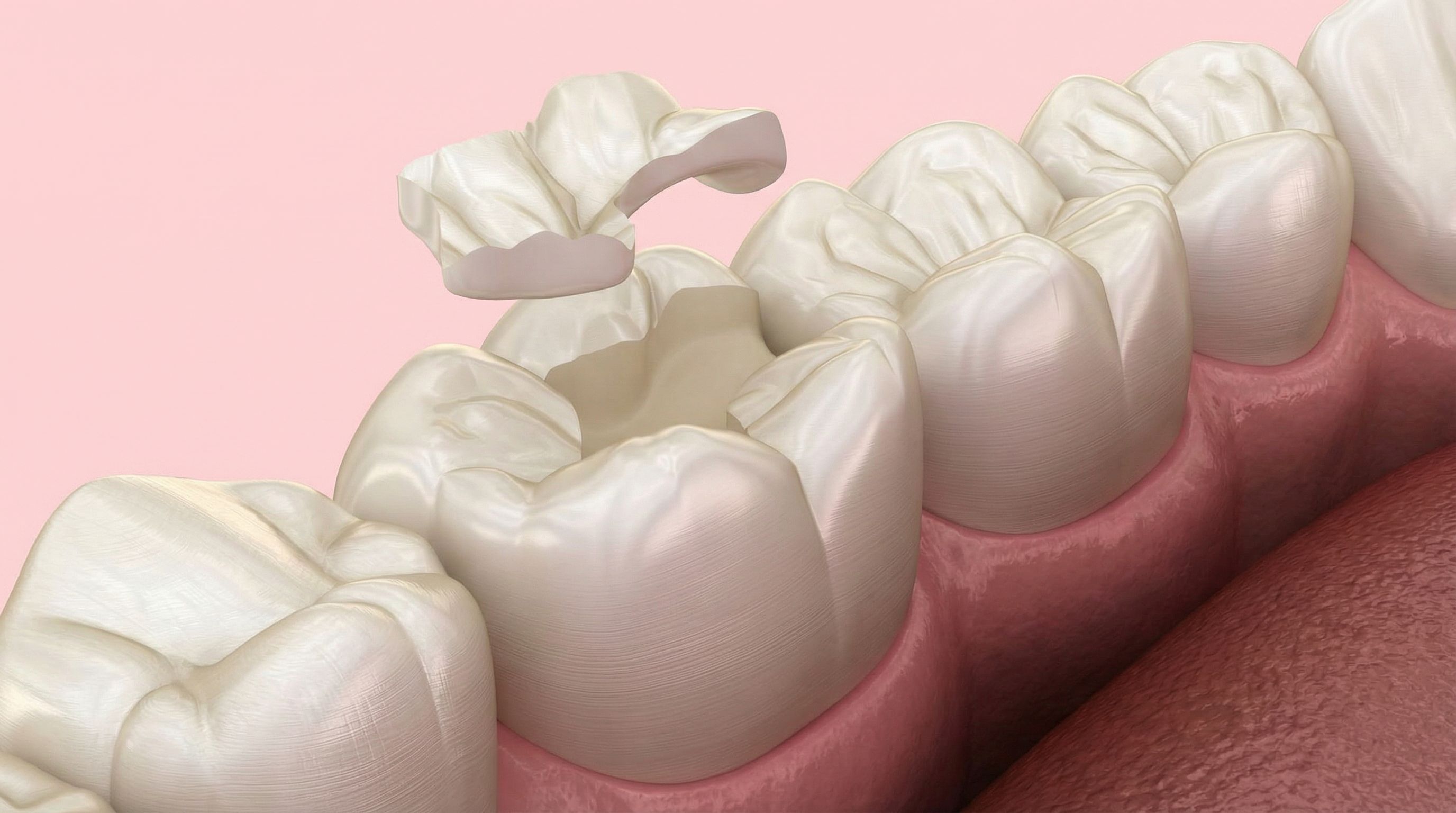
A cracked tooth can be anything from a harmless surface line to a tooth split beyond saving, and the treatment tracks the depth of the crack: shallow cracks get bonding or a crown, cracks reaching the nerve need a root canal plus a crown, and cracks extending below the gumline or through the root usually mean extraction. The defining symptom is sharp pain on biting, classically on release of the bite, that comes and goes unpredictably. Cracks do not heal and only travel deeper with every chewing cycle, so a suspected crack is an appointment to make this week, not a sensation to monitor: the difference between a crowned tooth and a pulled one is usually just time.
The 5 Types of Cracks, From Harmless to Hopeless
1. Craze lines. Superficial hairline lines in the enamel, extremely common in adult teeth, visible when light hits them. They cause no pain, need no treatment, and are a cosmetic issue at most. Finding craze lines in the mirror is not finding a cracked tooth.
2. Fractured cusp. A corner of a tooth, often around a large old filling, breaks off or cracks loose. Startling, usually not very painful, and typically straightforward: the tooth is restored with a new filling, onlay, or crown, and the nerve is often unaffected.
3. Cracked tooth (the true crack). A crack runs from the chewing surface toward the root, depth unknown from the outside. This is the diagnostic gray zone and the reason to act fast: caught while the crack is above the gumline, the tooth is usually saved with a crown, plus a root canal if the crack has reached the pulp. Every week of chewing invites the crack deeper.
4. Split tooth. The endpoint of an untreated crack: the tooth separates into distinct segments. A fully split tooth generally cannot be saved, though a specialist can occasionally salvage a root in multi-rooted molars.
5. Vertical root fracture. A crack beginning in the root itself, most common in teeth that had root canals years earlier. Often quiet until the surrounding bone gets infected, then discovered late. These teeth almost always require extraction (the decision logic is in root canal vs extraction).
Cracked Tooth Symptoms: The Telltale Pattern
- Sharp pain on biting that vanishes between bites, classically stabbing on release as the crack snaps shut. This "rebound" pain is the signature symptom.
- Pain that is inconsistent: one bite hurts, ten do not, then one does. Cracks only hurt when force flexes them the wrong way, which is why cracked teeth notoriously evade detection.
- Sensitivity to cold and sometimes sweet, from fluid moving in the crack and irritating the nerve.
- Difficulty pinpointing which tooth hurts. Crack pain refers along the jaw; patients regularly point to the wrong tooth.
- A visible line, a piece that moves, or a rough edge in more advanced cases.
If the pain pattern has shifted from bite-triggered to lingering, spontaneous, or nocturnal, the crack has likely reached the nerve, and the symptom set becomes the root canal pattern described in our signs you need a root canal guide.
"My Tooth Cracked in Half but Doesn't Hurt"
Painless does not mean harmless. Common painless scenarios and what they actually mean:
- A cusp broke off a heavily filled tooth: the nerve may be fine, but the exposed core is soft, decays fast, and the remaining walls are now overloaded. Repairable this month, often not next year.
- The tooth broke because it was already dead: a nerve that died quietly (see our dead tooth guide) leaves a brittle tooth that eventually crumbles. The infection question matters more than the missing piece.
- A crack in a root canal treated tooth: no nerve, no pain, real problem. These are the vertical root fracture candidates.
In every version, no pain means the alarm system is offline, not that the building is fine. A broken tooth without pain still needs an exam within days.
How Cracked Teeth Are Fixed
Diagnosis first: bite tests on individual cusps, light transillumination, dye, magnification, and imaging. Fine cracks hide from ordinary X-rays, so 3D imaging (CBCT) is sometimes used, and endodontists with operating microscopes find cracks that general exams miss.
Treatment by depth:
| Crack depth | Treatment | Outlook |
|---|---|---|
| Enamel only (craze lines) | None, or cosmetic bonding | Excellent |
| Cusp fracture, nerve unaffected | Filling, onlay, or crown | Excellent |
| Crack into dentin, above gumline | Crown to bind the tooth together | Very good if prompt |
| Crack reaching the pulp | Root canal + crown | Good; depends on crack depth |
| Below gumline / split / root fracture | Usually extraction, then implant or bridge | Tooth not savable |
Two honest caveats. First, a crowned cracked tooth is a managed tooth, not a cured one: success rates are good but below those of uncracked teeth, and your provider should say so. Second, there is no home repair: no wax, glue, kit, or supplement stabilizes a crack ("how to fix a cracked tooth naturally" has no true answers, only delays). Costs follow the treatment: a crown alone versus a root canal plus crown is the difference detailed in our root canal cost guide, and the procedure length in how long a root canal takes.
Protecting the Crack Until Your Appointment
- Chew on the other side, and skip hard foods entirely (nuts, ice, hard candy, crusty bread).
- Avoid extreme hot and cold if the tooth is temperature-sensitive.
- If a sharp edge is cutting your tongue or cheek, drugstore dental wax over the edge protects tissue temporarily.
- Save any broken piece in milk or saline and bring it; occasionally it can be bonded back.
- Do not test the tooth to see if it still hurts. It does not need the practice.
FAQ
Can a cracked tooth be fixed?
Usually, if treated early: bonding or a crown for shallow cracks, root canal plus crown when the crack reaches the nerve. Cracks below the gumline or through the root generally cannot be fixed.
Does a cracked tooth need to be pulled?
Only the deep ones: split teeth and vertical root fractures. Most cracks caught above the gumline are saved with a crown, which is the argument for acting within days rather than months.
What does a cracked tooth feel like?
Sharp, unpredictable pain on biting, often worst on releasing the bite, with cold sensitivity and difficulty identifying the exact tooth.
Is a cracked tooth with no pain okay?
No. Painless breaks include dead teeth and cracks in root canal treated teeth, both of which need evaluation. No pain means no alarm, not no problem.
Can a cracked tooth heal on its own?
Never. Tooth structure does not regenerate across a crack, and chewing forces drive every crack deeper over time. Early treatment is the entire game.